
Have you ever caught yourself wondering what the world might look like in 20 or 30 years? Maybe it’s after hearing about another heatwave, seeing images of devastating floods, or reading yet another article about climate change. For some people, these moments pass quickly. For others, they linger, bringing feelings of worry, frustration, sadness, or even helplessness about the future of our planet.
If that sounds familiar, you’re not alone. More and more people, especially young adults, feel overwhelmed by worries about climate change and environmental issues. This growing concern has a name: eco-anxiety. While caring about the planet is completely natural, constant exposure to environmental crises can sometimes leave us feeling anxious, helpless, or emotionally drained.
What is Eco-Anxiety?
Eco-anxiety is that uneasy feeling that can show up when we think about climate change and what it means for our future. Some people call it climate anxiety or environmental anxiety, but at its heart, it’s about caring deeply and feeling unsettled by what we see happening to the world around us.
If you’ve ever felt overwhelmed after reading about heatwaves, floods, wildfires, or other environmental challenges, you’re not alone. Research published in The Lancet Planetary Health found that many young people experience emotions such as worry, sadness, anger, and helplessness when thinking about climate change.
Eco-anxiety is not a mental health condition but rather a very real and genuine emotional reaction to what is taking place in the world. It, in many ways, illustrates just how much we care about the future of our planet- an issue that exists in reality. At its heart, it reveals the future of our planet and the people who share it.
Why is Eco-Anxiety increasing?
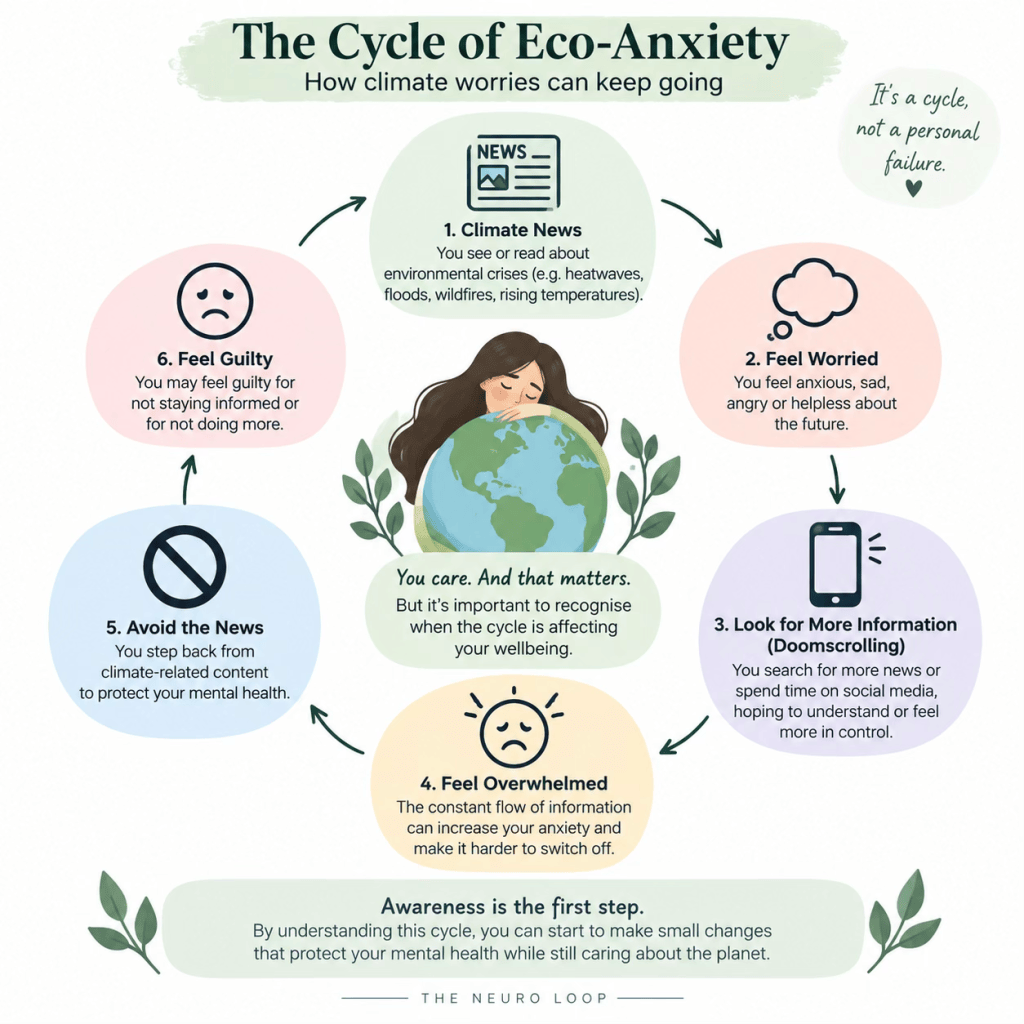
Today’s young people are constantly exposed to climate news, including wildfires and floods, rising temperatures, and environmental warnings. Social media heightens these worries, since doomscrolling makes it hard to stop looking at unpleasant content.
Climate change also causes a great deal of uncertainty regarding the future. It leads people to wonder about their careers, their financial situation, their family life, and the kind of world future generations will inherit. It is no surprise that a global study of 10,000 young people found that many felt frightened, helpless and frustrated about climate change. This is therefore a good explanation for why eco-anxiety is becoming so widespread.
Is Eco-Anxiety Normal?
Yes! Eco-anxiety is a real and increasingly common response to environmental concerns. While it is recognised by psychologists, it is not currently classified as a mental health disorder. In many cases, a certain level of concern can be healthy, encouraging people to stay informed and take positive action. However, when worries about climate change become overwhelming and start affecting sleep, concentration, mood, or daily life, they can significantly affect wellbeing. The key is to balance caring about the planet with caring for your own mental health.
Common Signs of Eco-Anxiety
Eco-anxiety can affect people in different ways, but some experiences tend to be more common than others. While occasional concern about environmental issues is normal, persistent distress may be a sign that climate-related worries are taking a toll on your well-being. Common symptoms of eco-anxiety include:
- Persistent worry about climate change and the future of the planet
- Feelings of helplessness or powerlessness
- Anger, frustration, or sadness about environmental issues
- Difficulty concentrating due to climate-related concerns
- Guilt about your personal environmental impact
- Sleep disturbances or racing thoughts at night
- Avoiding climate-related news because it feels overwhelming
Not everyone will experience eco-anxiety in the same way, but recognising these signs is often the first step towards managing them more effectively.
Coping with Eco-Anxiety
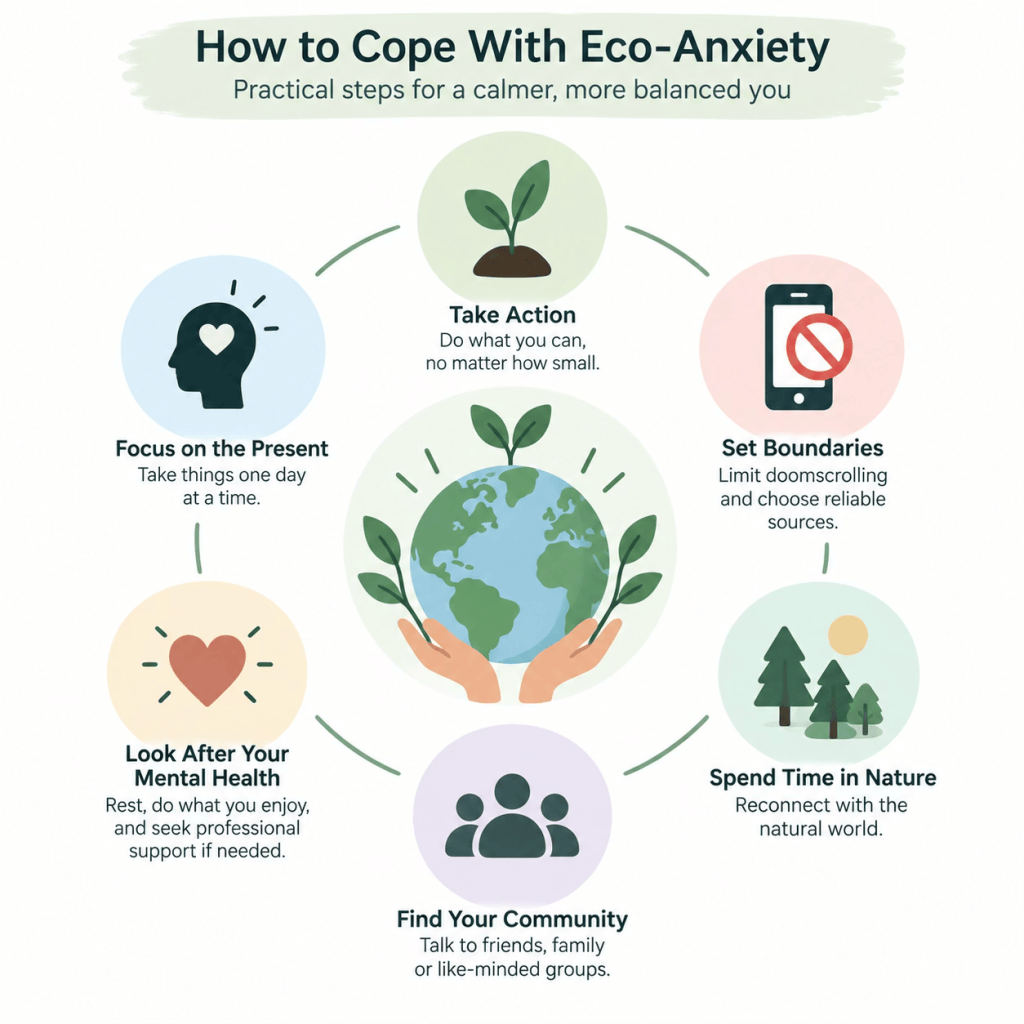
Eco-anxiety can feel overwhelming, especially when the problems seem so much bigger than any one person. Focusing on what you can influence-like cutting down on waste, saving energy, or getting involved with local environmental efforts can help turn that sense of worry into something more purposeful.
It’s easy to get caught up in endless scrolling through climate news, but too much exposure can leave us feeling even more anxious. Staying informed matters, but setting gentle boundaries around when and how often you check in can make a real difference.
Sometimes, the best way to ease eco-anxiety is to reconnect with what you’re worried about protecting. Even a short walk outside or a few quiet moments in a green space can help calm your mind and remind you why this work matters.
You don’t have to carry these worries on your own. Reaching out to friends, family, or a supportive community can offer perspective and remind you that you’re not alone in caring about these issues.
Eco-anxiety reminds us that caring about the planet is not a weakness; it reflects our connection to the world around us. While the challenges posed by climate change can feel overwhelming, remember that no one person is responsible for solving them alone. By focusing on what we can control, taking meaningful action, and supporting one another, we can transform concern into purpose. The goal is not to stop caring about the future, but to care in a way that protects both the planet and our own well-being.


Leave a Reply